Financing
DSCR Loan Requirements for Real Estate Investors

DSCR loans qualify the property, not the borrower’s income. If the rental income covers the monthly mortgage payment, you have the foundation to qualify. Lenders then layer in credit score, down payment, and reserves to finalize terms.
Here is the quick self-assessment checklist:
- DSCR: minimum required at most lenders; higher ratios typically unlock better pricing
- Credit score: minimum required at many programs; higher scores often qualify for better rates and higher LTV
- Down payment: typically around 20% or more for purchases; higher LTV may be possible with strong credit
- Reserves: expect 3-6 months of PITIA in post-closing reserves for standard files, scaling to 12 months for larger or higher-LTV files
- Documentation: lease or market rent appraisal, bank statements, entity docs if applicable; no W-2s or tax returns required
A quick profile check: if your property generates market rent comfortably above PITIA, you would likely qualify at competitive pricing on many programs, especially with a good credit score and sufficient down payment.
Table of Contents
- 1. What DSCR means and how to calculate it
- 2. DSCR ratio thresholds: what lenders actually require
- 4. Down payment and LTV expectations
- 5. Which property types lenders accept
- 6. How lenders treat LLCs, corporations, and trusts
- 7. The documentation DSCR lenders accept instead of tax returns
- 9. Practical steps to strengthen your DSCR loan application
- 11. Pros and cons of DSCR loans for investors
- Key Takeaways
- Free tools to model your DSCR before you apply
- Authoritative sources and further reading
- FAQ
1. What DSCR means and how to calculate it
DSCR stands for Debt Service Coverage Ratio. The formula is straightforward: DSCR = Gross Monthly Rent ÷ Monthly PITIA. PITIA covers principal, interest, taxes, insurance, and HOA dues where applicable. No other expenses enter the calculation at the loan level.
The rent figure lenders use is not always what a tenant is currently paying. For long-term rentals, the appraiser completes a Form 1007 or 1025 rent schedule to establish market rent, and lenders use whichever is lower: the actual lease or the appraiser’s market rent estimate. For short-term rentals, lenders typically apply a haircut to projected income (often around 20%) before running the calculation, reflecting vacancy and platform fees.
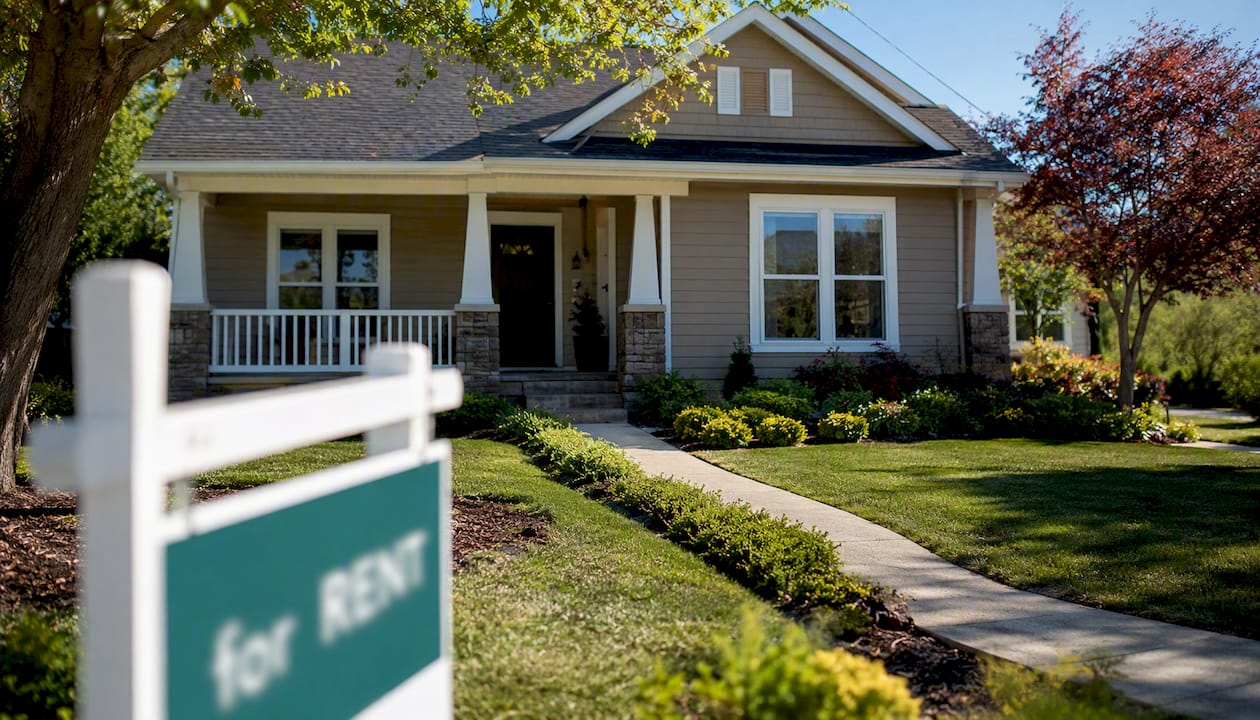
A quick example: a single-family rental with a $2,200 appraiser market rent and a monthly PITIA of $1,760 produces a DSCR of 1.25. That file passes a 1.00 threshold comfortably and hits the 1.25 tier that most lenders treat as the pricing sweet spot. A property with $1,600 in market rent against the same $1,760 PITIA produces a DSCR of 0.91, which would fail a 1.00 minimum unless the lender offers a sub-1.0 or “no-ratio” program.
2. DSCR ratio thresholds: what lenders actually require
DSCR is the primary risk metric lenders use when personal income is not part of underwriting. The ratio tells the lender how much cushion exists between rent and debt service, and different thresholds unlock different pricing tiers.
Common program tiers:
- 0.75-0.99 (“no-ratio” or sub-1.0 programs): available at some lenders, but require a larger down payment and stronger credit to offset the income shortfall. These programs trade DSCR flexibility for tighter credit and equity requirements.
A DSCR of exactly 1.00 means rent covers the payment with nothing left over. One vacancy month, a property tax reassessment, or an insurance renewal can push actual cash flow negative. That is why targeting 1.25 or higher is the practical standard, not just a lender preference.
Pro Tip: Before you apply, model the DSCR at 90% of projected rent to simulate a partial vacancy. If the ratio still clears 1.00, the file has real resilience. If it drops below the floor, consider a larger down payment to reduce PITIA.
4. Down payment and LTV expectations
For most purchases, plan on a 20-25% down payment, which translates to a 75-80% LTV. Some programs allow up to 80% LTV when the credit score is 700+ and the DSCR clears 1.25. Going below 20% down is uncommon on DSCR products; most lenders treat 80% as the ceiling for standard programs.
Key LTV benchmarks by transaction type:
- Cash-out refinance: typically capped at 75% LTV, sometimes 70% on certain property types or lower credit tiers. See the DSCR cash-out refinance guide for a full breakdown of equity extraction rules.
The down payment and DSCR interact directly. A larger down payment reduces the loan amount, which lowers monthly PITIA and raises the DSCR. If a property is borderline at 20% down, running the numbers at 25% or 30% down often moves the file into a better pricing tier or clears a 1.25 threshold that was previously out of reach. The free DSCR loan calculator at Cashflowcalcs lets you test different down payment scenarios instantly.
5. Which property types lenders accept
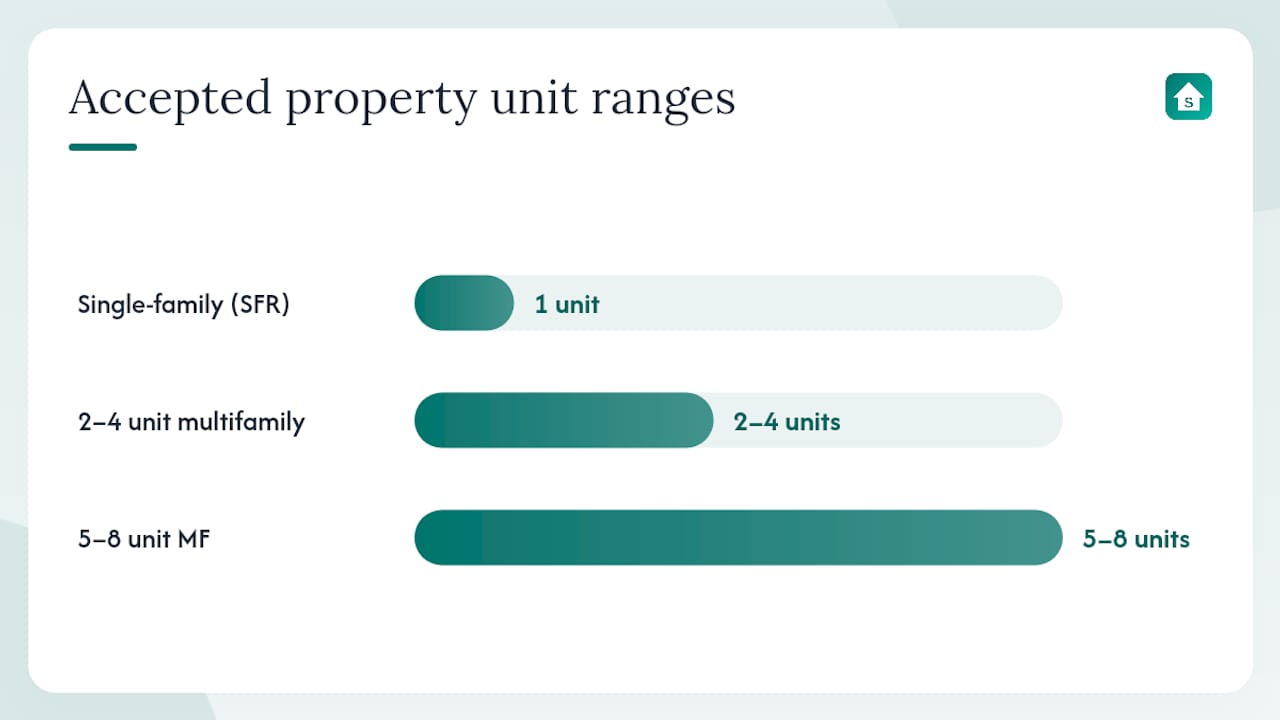
Most DSCR lenders focus on residential investment properties with 1-8 units. The eligible list is broad, but certain property characteristics trigger restrictions or outright denials.
Commonly accepted property types:
- Single-family residences (SFR), including detached and attached
- 2-4 unit small multifamily
- Warrantable condos and townhomes
- 5-8 unit small multifamily (available at some lenders, often with lower LTV)
- Short-term rentals (Airbnb, VRBO) with income validation
Restricted or higher-risk types:
- Non-warrantable condos (high investor concentration, pending litigation, or hotel-style amenities)
- Condotels and resort properties
- Mixed-use properties where commercial space exceeds a lender-defined threshold (often 20-25% of total square footage)
- Properties in severe disrepair or requiring structural repairs before occupancy
- Certain states may have tighter LTV caps or additional requirements based on foreclosure timelines
For short-term rentals, lenders validate income using AirDNA market data, actual booking history, or both. STR income typically receives a haircut before the DSCR calculation, reflecting realistic vacancy and platform fees. Host Financial’s 2026 guidelines confirm that STRs are eligible but require documented income validation rather than projected figures alone.
6. How lenders treat LLCs, corporations, and trusts
Most DSCR lenders accept vesting in a single-member LLC, multi-member LLC, corporation, or certain trust structures. The entity does not disqualify the loan, but the borrower’s personal credit is still pulled and a personal guarantee is typically required.
Required entity documentation:
- Articles of organization or incorporation (current and state-certified)
- Operating agreement or corporate bylaws
- EIN confirmation letter from the IRS
- Certificate of good standing from the state of formation (some lenders require this)
No operating history is usually required for the entity itself. A newly formed LLC can hold the property at closing. What matters is that the documents are current, the borrower is identified as a member or officer, and title can be taken in the entity’s name without triggering title insurance complications.
Pro Tip: If you plan to vest in an LLC, confirm with your title company and lender before opening escrow. Some lenders require the LLC to be formed in the same state as the property, and title requirements for entity-owned properties can add a few days to the closing timeline.
Trusts are accepted at some lenders, particularly revocable living trusts, but require additional trustee certification and trust agreement review. Land trusts are handled case by case.
7. The documentation DSCR lenders accept instead of tax returns
DSCR loans are built around the property’s income, so the documentation list looks very different from a conventional mortgage. No W-2s, pay stubs, or tax returns are required, and lenders do not calculate a debt-to-income ratio.
Standard documentation checklist:
- Completed loan application (Form 1003)
- Government-issued photo ID
- Two months of bank statements (to verify reserves)
- Purchase contract (for purchases) or current mortgage statement (for refinances)
- Executed lease agreement or appraiser market rent analysis (Form 1007/1025)
- Property insurance binder
- Entity documents if vesting in an LLC or corporation
For short-term rentals, add:
- AirDNA market report or 12 months of booking history
- Platform income statements (Airbnb, VRBO host dashboard)
Pro Tip: Order the appraisal early. The rent schedule on the appraisal is the document that establishes the DSCR, and a low market rent estimate can kill a file that looked strong on paper. If you have an existing lease above market rent, confirm with your lender which figure they will use.
9. Practical steps to strengthen your DSCR loan application
Getting approved is one goal. Getting approved at the best rate and LTV is another. These steps address both.
- Model the DSCR before you make an offer. Use the Cashflowcalcs DSCR loan calculator to test the ratio at your target purchase price and rate. If the DSCR is below 1.25, adjust the down payment or target a lower purchase price.
Red flags to fix before applying: recent 30-day late payments on any credit account, insufficient post-closing reserves, and incomplete or outdated entity documents are the three most common reasons DSCR files receive conditional approvals or delays.
Pro Tip: Clean files close faster. Pinnacle Funding Network notes that well-prepared DSCR files can close in 20-30 days. Every missing document adds time, so treat the checklist in Section 7 as a pre-submission requirement, not a lender request list.
11. Pros and cons of DSCR loans for investors
Advantages:
- No tax returns, W-2s, or DTI calculation required; qualification is based on property income
- Entity-friendly: LLCs and corporations are accepted at most lenders
- Scales well for investors with multiple properties who cannot qualify conventionally due to DTI
- Short-term rentals are eligible with proper income documentation
- Faster underwriting on clean files compared to conventional investment loans
Disadvantages:
- Rates are typically higher than conventional investment property loans, reflecting non-QM pricing
- Reserve requirements add to the cash needed at closing
- LTV caps on certain property types (non-warrantable condos, STRs) can be lower than standard programs
- Prepayment penalties are common and can be costly for investors with short hold periods
- Credit score has a larger pricing impact than on conventional loans; a sub-660 score meaningfully raises the rate
DSCR loans make the most sense when you cannot document income conventionally (self-employed, multiple properties, LLC ownership) or when speed and documentation simplicity outweigh the rate premium. For investors who can qualify conventionally, comparing both options on total cost is worth the extra step.
Key Takeaways
DSCR loans qualify based on property income, not personal income, making them the go-to financing tool for self-employed investors and those scaling a portfolio.
| Point | Details |
|---|---|
| DSCR floor | Most lenders require a minimum DSCR of 1.00; target 1.25+ for best pricing and a vacancy buffer. |
| Credit score range | A 620 score meets the entry threshold at many programs; 700+ unlocks the best rates and maximum LTV. |
| Down payment | Plan for 20-25% down on purchases; cash-out refinances are typically capped at 75% LTV. |
| Reserves required | Expect 3-6 months of PITIA in post-closing reserves, scaling to 12 months for larger or higher-LTV files. |
| Model before you apply | Use the free Cashflowcalcs DSCR loan calculator to test DSCR, sensitivity scenarios, and pricing tiers before submitting an application. |
Free tools to model your DSCR before you apply
Knowing whether a property qualifies before you talk to a lender saves time and prevents surprises at underwriting. The free DSCR loan calculator at Cashflowcalcs lets you enter purchase price, loan amount, interest rate, taxes, insurance, and market rent to calculate your DSCR instantly, with no sign-up and no download required. Every calculation runs in your browser, so your numbers stay private.
For investors comparing multiple deals, the rental property calculator models full cash flow, NOI, and PITIA in one place, giving you the inputs you need to test different financing scenarios. Results are educational estimates for modeling purposes and are not financial or lending advice. Confirm current program terms with a licensed lender before making financing decisions.
Authoritative sources and further reading
These resources are worth bookmarking before you apply:
- What is debt service coverage ratio (DSCR) in real estate
- DSCR loan qualification requirements
- DSCR Loan Requirements in 2026: Credit Scores, Down Payments, and What Lenders Actually Look For | Sinai Capital
- DSCR Loan Requirements & Guidelines 2026 | Host Financial, Host Financial
- How DSCR Loans Are Underwritten | Lendmire
- How DSCR Loans Work in 2026: The Complete Investor Guide
- NMLS Consumer Access
FAQ
What are the minimum requirements for a DSCR loan?
Most lenders require a minimum DSCR of 1.00, a credit score of at least 620, a down payment of 20-25%, and 3-6 months of post-closing reserves. No tax returns or W-2s are required.
How hard is it to qualify for a DSCR loan?
Qualifying is straightforward if the property’s rent covers PITIA and you meet the credit and reserve minimums. The most common reasons for denial are a DSCR below the lender’s floor, insufficient reserves, or recent late payments on credit accounts.
Can an LLC get a DSCR loan?
Yes. Most DSCR lenders accept single-member and multi-member LLCs. The borrower’s personal credit is still pulled and a personal guarantee is typically required, along with articles of organization, an operating agreement, and an EIN letter.
What is the downside of a DSCR loan?
DSCR loans carry higher interest rates than conventional investment property loans, often include prepayment penalties, and require meaningful cash reserves at closing. Credit score has a larger impact on pricing than on conventional products, so a sub-660 score can raise the rate noticeably.
Do DSCR loan requirements differ for purchases versus refinances?
For purchases, most lenders allow up to 80% LTV on strong files. Cash-out refinances are typically capped at 75% LTV, and most lenders require at least 6 months of ownership seasoning before a cash-out refi is permitted. Rate-and-term refinances generally follow purchase LTV guidelines with shorter or no seasoning requirements.